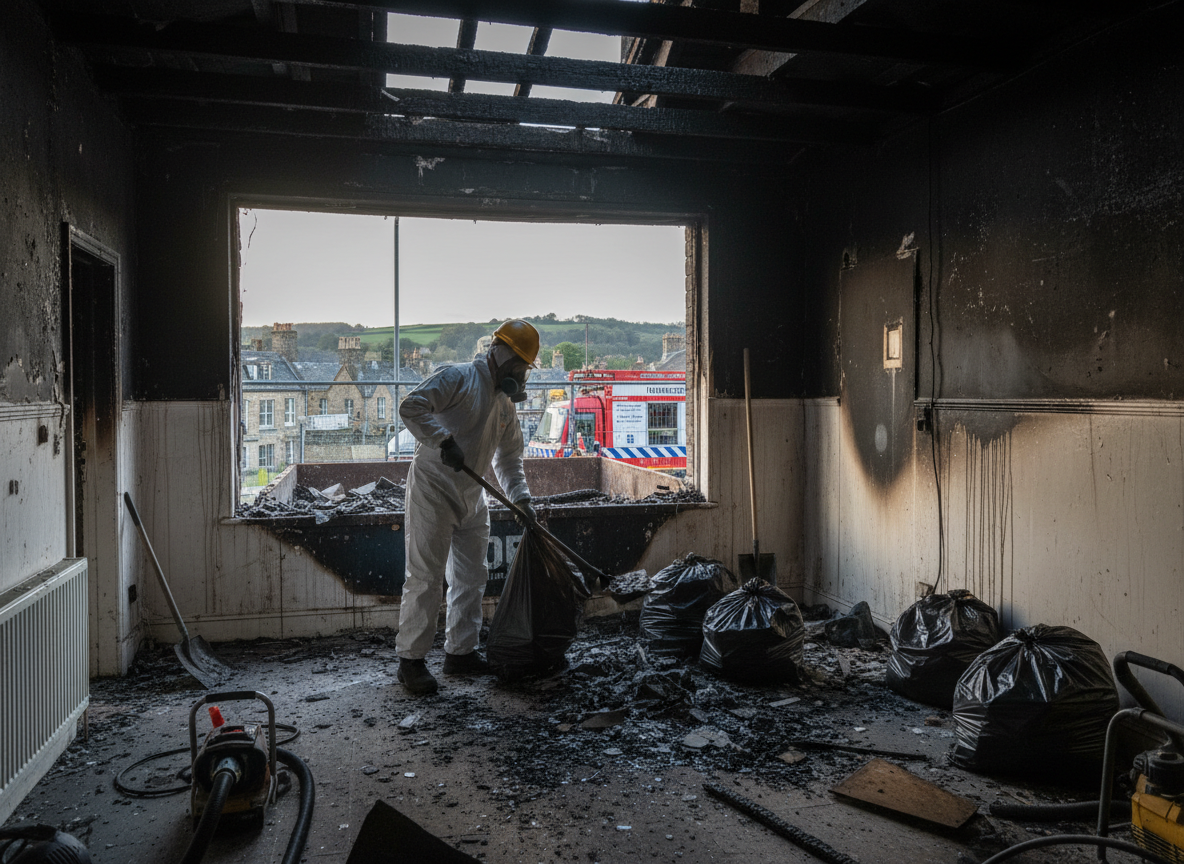
Apartment fires in Winchester often involve shared walls and lightweight construction common in French Valley and Winchester Ranch developments. Soot travels through HVAC returns and electrical chases, settling on vinyl flooring, textured drywall and acoustic ceilings typical of post-2000 builds. Dry summer conditions accelerate soot adhesion to surfaces, requiring pH-neutral cleaners and HEPA vacuuming before any painting to avoid ghosting stains later.
Cleanup crews must isolate the affected unit from adjacent apartments using negative air machines and plastic barriers to prevent cross-contamination into neighboring units. Riverside County code requires removal of all charred insulation and verification that no hidden fire residue remains in attics or between floors. Odor neutralizers are applied after surface cleaning because porous materials like carpet padding and cabinet interiors hold smoke longer in the low-humidity climate.
Edge cases include water used by firefighters that can warp particleboard cabinetry and promote mold if not dried within 48 hours. Technicians test for asbestos in older Winchester Hills units built before 1980 and follow strict containment when disturbing those materials. Final clearance includes third-party air sampling to confirm particulate levels meet habitability standards before tenants return.
Technician insight
In Winchester, the thing that catches most people out with Apartment fire cleanup is how quickly soot bonds to textured drywall during our dry summers. French Valley apartments built after 2010 often have open floor plans that let smoke travel into every closet and under every cabinet, so you end up removing more material than the visible burn area suggests. Skipping the negative air setup always costs more later when neighbors complain about lingering odor.
Smoke migration through shared HVAC in Winchester Ranch
A kitchen fire in a second-floor unit sent soot through the return ducts into three neighboring apartments. We found residue inside the shared plenum and behind baseboards that standard cleaning had missed. Negative air machines isolated the affected units while we cleaned ducts and replaced insulation. Tenants returned within five days after clearance testing passed.
How it works
- 1
Initial Assessment
Technicians inspect the unit, document soot migration paths through shared walls, and note any water damage from suppression efforts.
- 2
Containment and Safety
Negative pressure barriers are installed, HVAC systems are sealed, and hazardous materials are identified before work begins.
- 3
Soot and Residue Removal
HEPA vacuuming, chemical sponges and pH-adjusted washes clean all surfaces, followed by removal of unsalvageable porous materials.
- 4
Odor Neutralization and Drying
Ozone or hydroxyl generators treat remaining odors while dehumidifiers address moisture introduced during firefighting.
- 5
Final Clearance
Air quality testing and visual inspection confirm the unit meets habitability standards before reoccupancy.
Pricing
Cost depends on square footage affected, soot migration into HVAC and whether shared walls require work in adjacent units; upfront quotes provided after inspection.