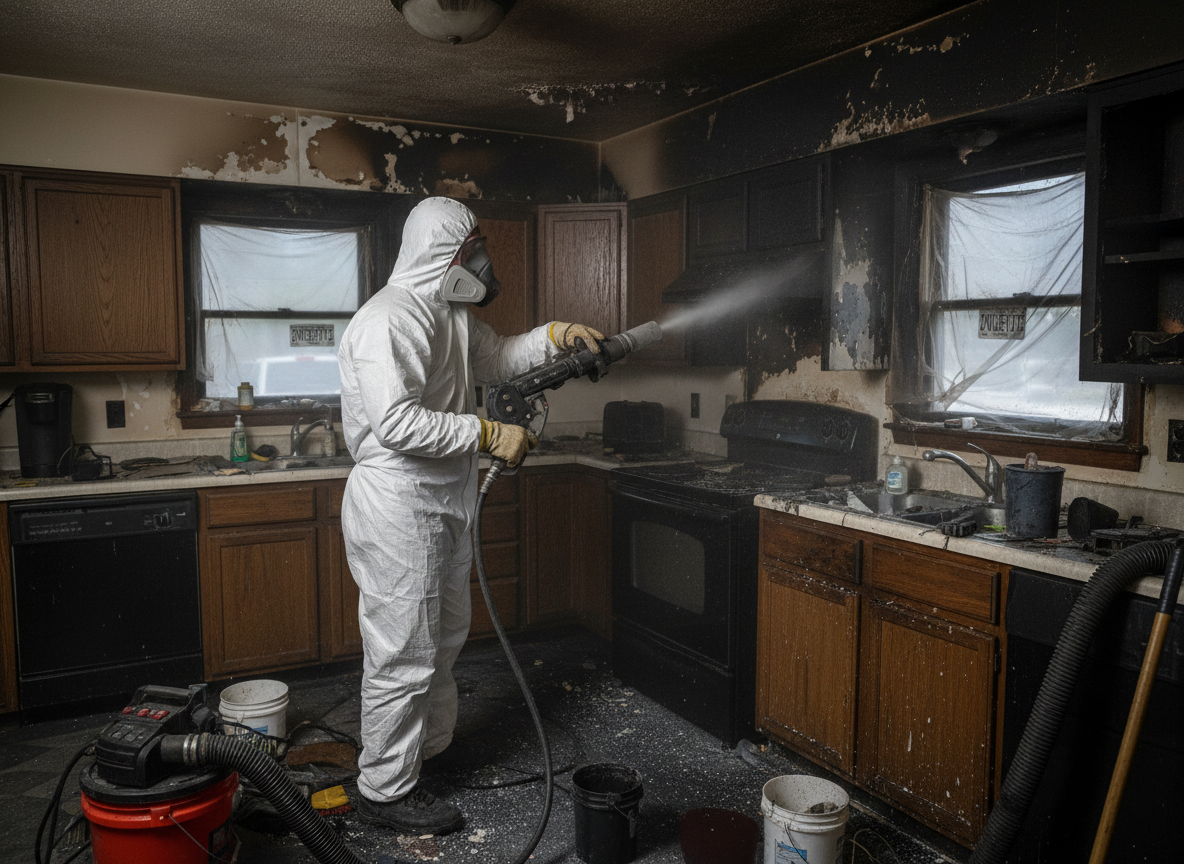
Smoke from structure fires travels through the dry summer air common in Winchester's hot-summer Mediterranean climate and settles deep into porous materials like insulation and textured drywall found in homes built across Winchester Ranch and French Valley. Residues from burning plastics and woods common in Riverside County construction create acidic films that etch surfaces if not neutralized within days. Technicians at our Winchester Rd location test pH levels on site because untreated smoke can reactivate during the low-humidity months and re-odorize rooms. Air handlers and ductwork in single-story ranch homes near Diamond Valley Lake often require separate negative-air setups to prevent cross-contamination into unaffected wings.
Homes in Winchester Hills frequently feature open-beam ceilings and attached garages that allow smoke to bypass standard room-to-room barriers, requiring full HVAC isolation before any cleaning begins. We use specialized degreasers matched to the soot type rather than generic sprays because the area's agricultural dust mixes with smoke and creates stubborn films on tile and cabinetry. Edge cases include smoke trapped behind electrical plates or in crawl spaces where soil moisture from occasional winter rains can reactivate odors months later. California building codes require documentation of all removed materials when smoke affects load-bearing elements, which we handle before any reconstruction starts.
Handling HVAC and Attic Residues
Dry summers in Riverside County let fine smoke particles travel upward into attics of homes near the Winchester Museum, where blown-in insulation holds odor for years. We isolate returns first, then run HEPA air scrubbers with charcoal stages sized for the square footage typical in French Valley tracts. Homeowners who run fans too soon often push residues into wall cavities, extending the job. Proper sequencing prevents that spread and keeps restoration limited to the affected zones.
Technician insight
In Winchester, the thing that catches most people out with smoke damage restoration is how the dry summer air lets smoke travel through attics and into wall cavities of homes in Winchester Hills and French Valley, especially those with older insulation near Diamond Valley Lake. Homeowners often run box fans too soon and push residues deeper, turning a two-day job into a full gut. We always map the HVAC first because of the low humidity that keeps particles airborne longer here.
French Valley Smoke Migration
Smoke from a kitchen fire in a French Valley home traveled through the return ducts into bedrooms. We found acidic residue on drywall behind outlets and in the attic insulation. Negative air and targeted degreasing removed the film; odor neutralization cleared the rest. The family returned within five days without reconstruction.
How it works
- 1
Initial Assessment
Inspect all affected rooms, test surfaces for pH, and map smoke travel paths through the home's HVAC and attic spaces.
- 2
Containment and Ventilation
Set up negative air machines and seal doorways to stop particles from moving into clean areas of Winchester Ranch homes.
- 3
Surface Cleaning
Apply pH-specific cleaners to walls, ceilings, and contents while removing unsalvageable porous materials.
- 4
Odor Neutralization
Run hydroxyl generators and thermal fogging where needed, followed by post-treatment air quality checks.
- 5
Final Clearance
Re-test surfaces and air, then document for insurance before returning the home to normal use.
Pricing
Cost depends on square footage affected, soot type, and whether HVAC or attic work is needed; we provide upfront written estimates after inspection.