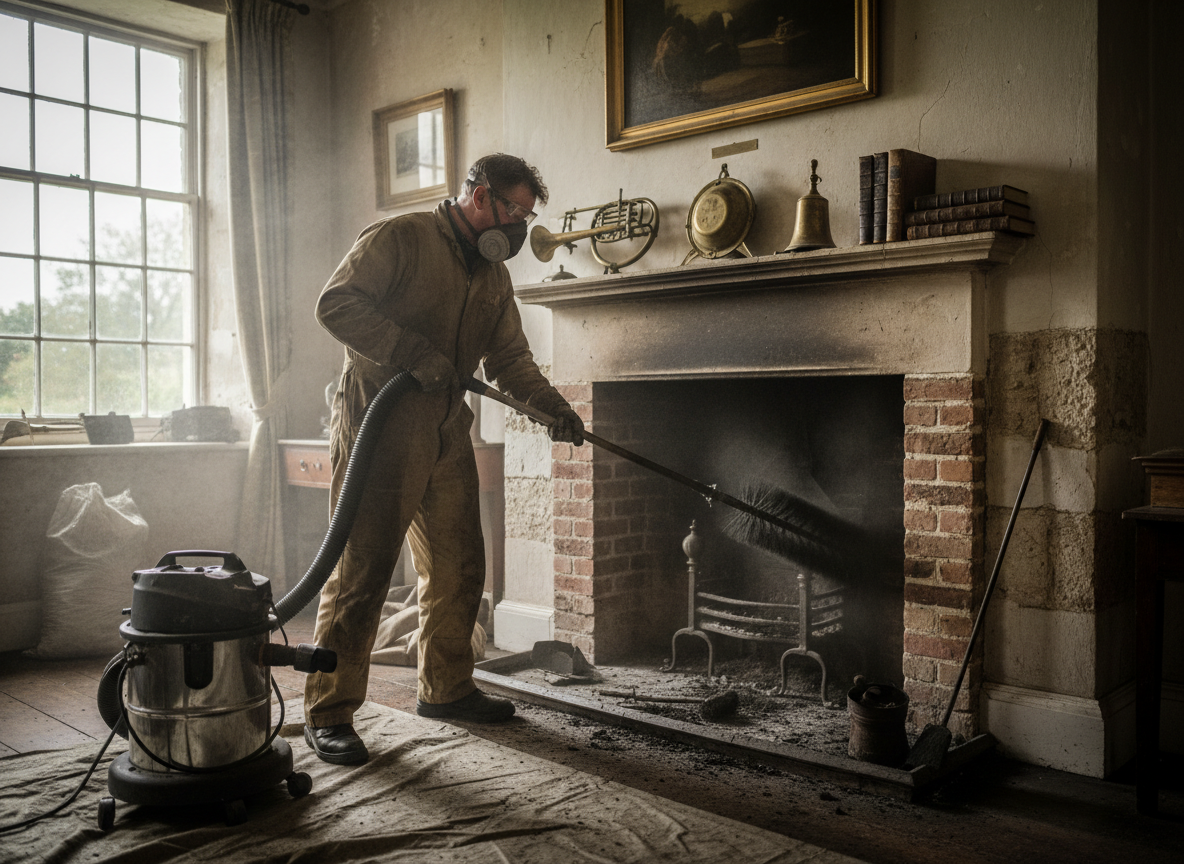
Soot from structure fires in Winchester settles differently on the stucco and wood-frame homes common in Winchester Ranch and French Valley. Dry summer air lets fine particles travel farther through open windows and ridge vents before lodging in carpet fibers, popcorn ceilings, and unsealed drywall. Technicians start by mapping airflow paths from the fire origin, then use negative-air machines to keep particles from migrating into unaffected rooms while they agitate and extract residue from textured surfaces.
Older homes near the Winchester Museum often have lath-and-plaster walls and single-pane windows that trap oily soot in hairline cracks. Riverside County’s hot-summer Mediterranean climate means rapid temperature swings after sunset can drive condensation that sets soot stains permanently if not addressed within the first 48 hours. Crews test pH on each surface before choosing alkaline or solvent-based cleaners, avoiding damage to original trim or hardwood floors found in many French Valley properties.
HVAC systems in Temecula and Menifee border homes pull soot deep into ductwork and coil fins. Technicians remove and clean registers first, then fog coils with encapsulants that prevent re-soiling once the system restarts. Attic insulation in these single-story ranch houses frequently requires selective removal rather than full replacement when soot has only coated the top layer, saving homeowners unnecessary disposal costs while meeting local air-quality guidelines.
Seasonal Considerations
Dry summers increase airborne soot travel, so crews seal attic vents and use HEPA filtration earlier in the job. Winter rains can push settled soot into soil around foundations, requiring exterior pressure washing on properties near Diamond Valley Lake where drainage is slow.
Technician insight
In Winchester, the thing that catches most people out with soot removal is how fast dry summer winds push fine particles into single-pane window tracks and unsealed attic hatches in the older Winchester Ranch homes. Homeowners try wiping it themselves and just smear the oily residue deeper into the plaster. We always check the return ducts first because once the AC kicks on again it redistributes everything we missed.
Soot in French Valley Ranch Home
A kitchen fire sent soot through the central air system of a 1990s ranch house in French Valley. We found heavy residue on the evaporator coil and in every bedroom register. After mapping airflow and running negative air for 24 hours, we extracted the ducts, treated the coil, and removed only the top two inches of attic insulation. The homeowners were back in the house within four days with passing air-quality readings.
How it works
- 1
Initial Assessment
Technicians inspect all affected rooms, test surfaces for pH and porosity, and document soot migration through HVAC returns in Winchester homes.
- 2
Containment Setup
Negative air machines and plastic barriers isolate the work zone to prevent particles from reaching unaffected areas in French Valley and Winchester Hills properties.
- 3
Agitation and Extraction
Specialized sponges and HEPA vacuums lift residue from drywall, wood, and carpet without spreading it, followed by pH-adjusted cleaning solutions.
- 4
HVAC and Attic Cleaning
Ducts, coils, and insulation are addressed last to avoid re-contamination, with selective insulation removal when only surface soot is present.
- 5
Final Clearance
Air quality readings and surface inspections confirm soot levels meet post-fire standards before equipment is removed from the 35952 Winchester Rd service area.
Pricing
Cost depends on square footage affected, surface types, and whether HVAC or attic work is required; 24/7 assessments available from our Winchester Rd location.