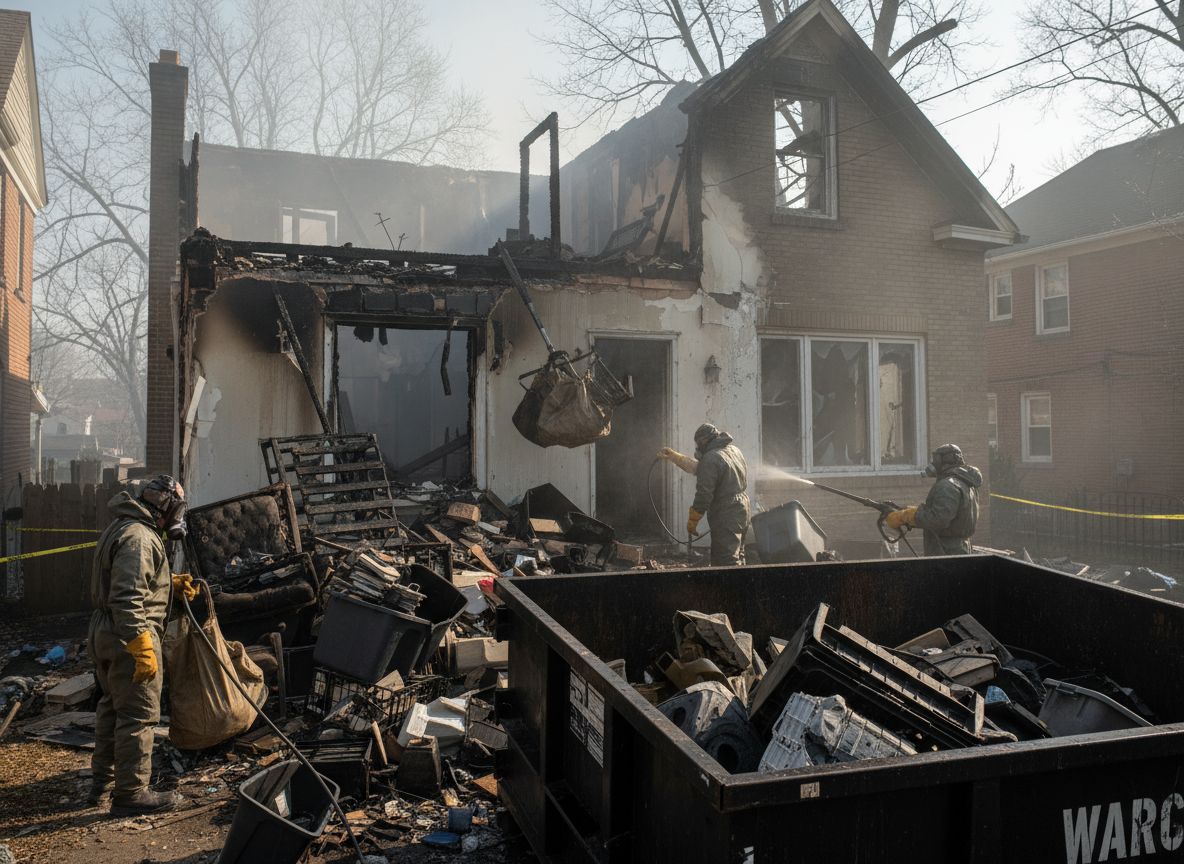
Hoarding cleanup after fire demands careful sequencing because accumulated materials often intensify burn patterns and trap soot in cavities. In Winchester's hot-summer Mediterranean climate, dry summers leave fine ash airborne longer, allowing it to settle deep into insulation and wall voids typical of homes built in Winchester Hills and French Valley during earlier decades. Crews must separate charred debris from salvageable items while containing dust that can otherwise migrate to neighboring properties near Diamond Valley Lake during wind events.
Riverside County properties in Winchester Ranch frequently feature older wood-frame construction with limited access points once rooms are filled with stored goods. Post-fire, these conditions create hidden ember pockets and require negative-air machines to prevent cross-contamination during removal. Soil in the area tends to be sandy, so any water used for suppression or cleaning can migrate quickly, necessitating containment barriers to avoid secondary damage to crawl spaces or slabs.
Local fire patterns show that hoarded garages and outbuildings near Highway 79 corridors burn hotter due to stacked combustibles, leaving behind layered residues that standard cleaning misses. Restoration teams coordinate with Riverside County waste rules for disposal of contaminated items, ensuring loads from Temecula or Hemet jobs meet landfill acceptance criteria without delays.
Technician insight
In Winchester, the thing that catches most people out with hoarding cleanup after fire is how dry summer winds push fine ash deep into the voids of older French Valley homes with single-pane windows and minimal insulation, so what looks like surface soot often requires pulling drywall we don't always need in newer Menifee builds.
Winchester Hills Garage Hoard
A fire started in a packed garage on a Winchester Hills street and spread into the attached laundry room. Crews found layered cardboard and fabric that had created deep char pockets under the slab edge. Selective removal, negative air, and targeted cleaning restored the space without full demolition of the older framing.
How it works
- 1
Initial Safety Assessment
Technicians evaluate structural stability, identify hazardous materials, and map access routes through hoarded spaces while wearing full PPE.
- 2
Containment and Ventilation Setup
Negative air machines and plastic barriers isolate affected rooms to keep soot from spreading into unaffected areas of the home.
- 3
Selective Debris Removal
Layered items are sorted, documented, and removed in stages, separating fire-damaged goods from those that can be cleaned.
- 4
Deep Cleaning and Odor Treatment
HEPA vacuuming, surface washing, and thermal fogging address embedded soot and smoke odors in porous materials.
- 5
Final Clearance and Documentation
Visual and air-quality checks confirm the space meets habitability standards before returning the home to the owner.
Pricing
Pricing varies with debris volume, fire intensity, and access difficulty; upfront assessment provided before work begins.