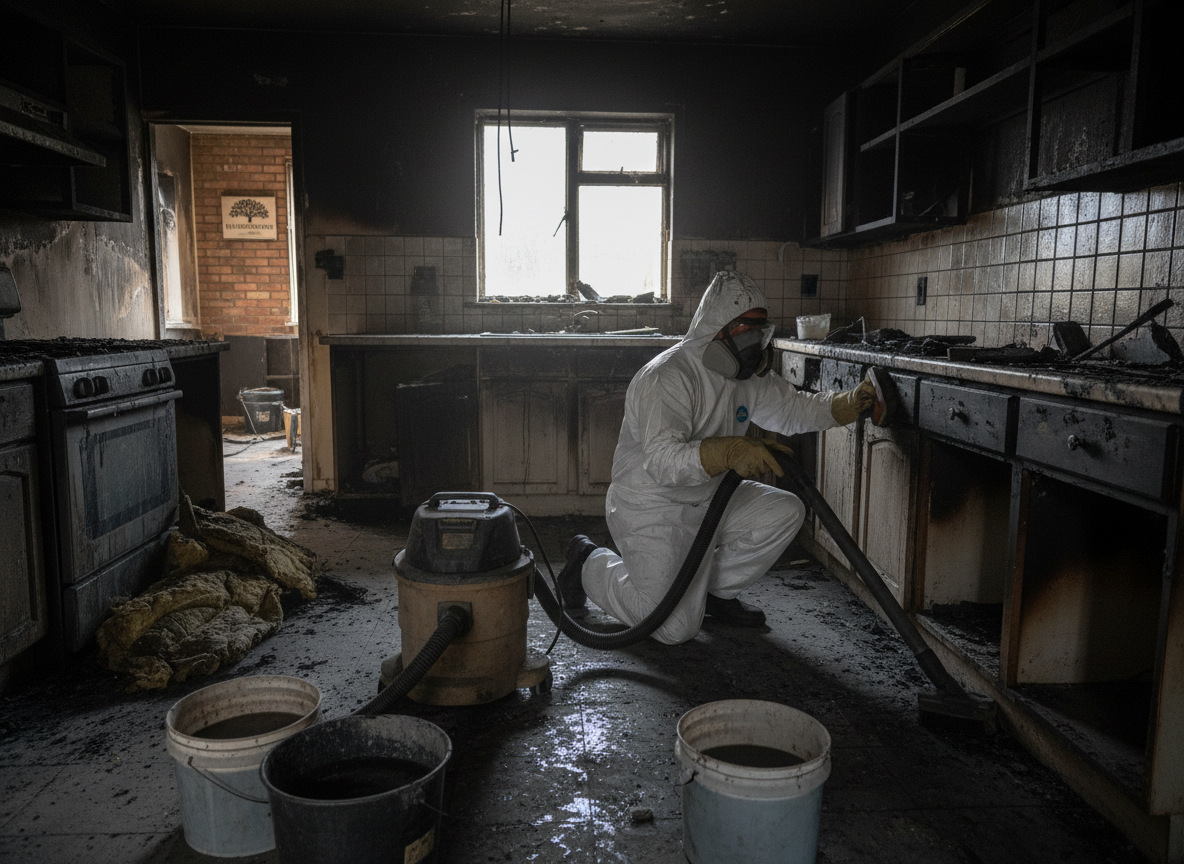
Kitchen fires in Winchester often start on stovetops or in ovens within single-story ranch homes built in the 1980s and 1990s that line Winchester Ranch and French Valley. These older builds frequently have open floor plans and limited attic insulation, allowing smoke to travel quickly into living areas and HVAC systems. Dry summer conditions common to the hot-summer Mediterranean climate accelerate soot adhesion on drywall, cabinetry, and tile, requiring specialized HEPA vacuuming and chemical neutralization rather than standard cleaning.
Technicians must address hidden residue inside range hood ducts and behind appliances, where grease combines with smoke particles to create stubborn films. In homes near Diamond Valley Lake, higher humidity pockets during rare winter rains can cause secondary mold growth on water-damaged subfloors after suppression efforts. Riverside County building codes require verification that electrical wiring in affected walls meets current standards before any reconstruction begins, especially in properties close to the Winchester Museum area where many structures predate modern fire separation requirements.
Edge cases include fires that breach into crawl spaces common on the sloped terrain of Winchester Hills, where soil movement can crack foundation seals and allow odors to linger. Proper documentation of pre-existing wear on laminate countertops and vinyl flooring prevents disputes during insurance claims. Work proceeds room by room to contain cross-contamination, using negative air machines positioned at exterior doors to exhaust particles away from neighboring properties in dense sections of Menifee Road corridors.
Technician insight
In Winchester, the thing that catches most people out with kitchen fire cleanup is how dry summer winds push fine soot into the unsealed attic spaces of 1980s ranch homes in Winchester Ranch and French Valley, where it settles on insulation and never gets addressed without a full pull-down inspection.
Stovetop Grease Fire in French Valley Home
A cooking fire spread from the range to upper cabinets in a single-story home off Winchester Road. Inspection revealed heavy soot inside the HVAC return and attic insulation. Crews contained the zone, cleaned ducts, and treated odors before returning the property to pre-loss condition.
How it works
- 1
Initial Assessment and Safety
Inspect the kitchen and adjacent rooms for structural compromise, electrical hazards, and smoke migration paths while documenting all damage for insurance.
- 2
Containment and Ventilation
Set up plastic barriers and negative air units to isolate the affected zone, then vent smoke particles outdoors before any cleaning starts.
- 3
Soot and Residue Removal
Apply dry cleaning sponges and HEPA vacuums to surfaces, followed by degreasers on cabinets, appliances, and ductwork to lift embedded particles.
- 4
Odor Neutralization and Final Clearance
Treat remaining smells with hydroxyl generators or ozone equipment, then test air quality and perform a final walkthrough with the homeowner.
Pricing
Cost depends on square footage affected, smoke penetration depth, and whether HVAC systems require full cleaning.